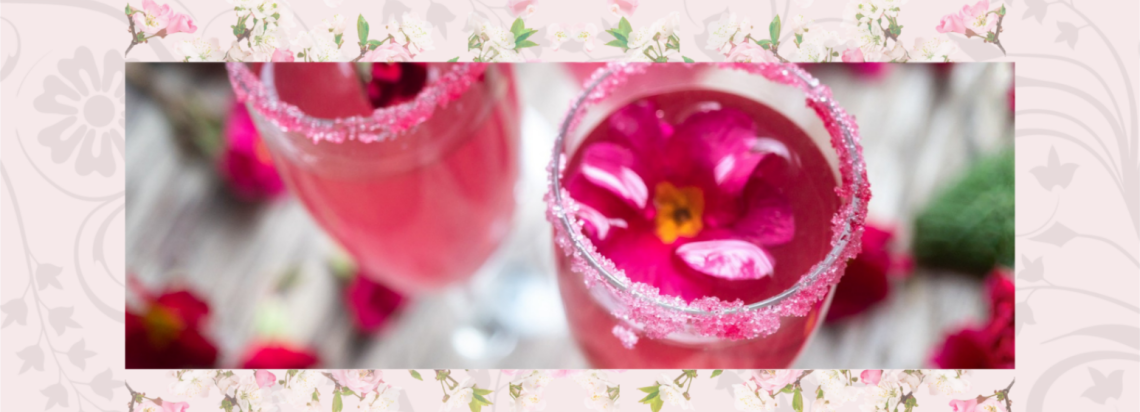

Tomorrow I will gather blossoms in my garden as part of my annual summer solstice ritual. Each year I preserve these in magical floral extracts which I use in baking and cocktails and others will be consumed directly in cookies, cakes, or tarts later that evening during a Midsummer picnic. This floral-infused lemon tart is one of the easiest recipes of all, taking 3-4 hours from harvest to stovetop to tabletop (providing the shell is pre-baked and ready to go). This means blossoms can be gathered and consumed on the same day – vitally important for capturing that solstice magic!

Here in the Northern Hemisphere, the summer solstice is the longest day of the year when the sun’s powers are at their height, and flowers (nature’s seductive agents of reproduction) are brimming with solar energy. That means they not only enhance our energy and vitality but possess double their beautifying, healing, and magical powers. This is why this tart is one of my favorite summer solstice traditions. It not only features flowers associated with summer solstice lore, sun goddesses, and the realm of the fairy but its bright citrusy curd absorbs the sweet fragrance of blossoms such as rose, elderflower, and honeysuckle beautifully!
 In Baltic regions (home to my maternal ancestry) the rose was the flower of the sun goddess Saule who was celebrated at this time. Roses and rosettes are her emblems, as the rose is the shape of both the morning and the evening sun. In Latvian songs known as Daina, Saule travels in a golden boat and is known as ligo “the rolling sun” or a “golden circle” that rolls down the mountains

According to Latvian folklore, Saule dances on the hills on summer solstice wreathed in roses and red flowers. In Slavic tales, roses are associated with fairies known as Rusalka who emerge at Midsummer to bring fertility to the land. In Ireland, the rose is also associated with fairies, the sprites that spirit mortals away to the mythical land of Tír Na Óg, The Land of Summer.

Another iconic flower of Midsummer fairies is the elder blossom. Its sweet heady scent according to Guido Masé is almost “narcotic” which could explain why this English seventeenth-century grimoire advises one to “stroll beneath an elder tree when the Sun is at the (highest) hottest to conjure a Fairy Queen and acquire her favors.” In Germany, the elder tree is the home of the Goddess Mother Holle and on Midsummer’s Eve, she lures people under her branches to open their eyes to the fairy realm.

Calendula was another flower traditionally gathered at the summer solstice. As a sun herb, calendula has long been considered a symbol of vigor, strength, and abundance. In medieval times calendula was known as “Mary’s Gold’ or Marigold as the flower petals were likened to rays of light crowning the Virgin’s head. Mary Magdalen was also known by the name Mary Gold. Energetically Calendula Floral essence is for “those who yearn for the radiance of the sun, or for when one feels unsupported by life.”

“Honeysuckle has always been known as the emblem of captive love because of the marks it makes on other plants as it twines about them.” Honeysuckle grows on the river bank where the fairy Queen Titania sleeps in Shakespeare’s A Midsummer Night’s Dream and she describes her entwining love for Nick Bottom “Sleep thou, and I will wind thee in my arms…So doth the woodbine the sweet honeysuckle Gently entwist; the female ivy so Enrings the barky fingers of the elm. O how I love thee, how I dote on thee!” I used Japanese Honeysuckle (L. Japonica) as it is invasive and grows throughout my neighborhood – and likely yours too!

Chamomile is another midsummer flower but I chose wild chamomile as I love its pineapple flavor (hence its nickname Pineapple Weed). It is related to chamomile but is native to North America and here in BC First People treasured their scent, using them to line bedding and cradles. The early settlers soon cottoned on to her tender loving nature, which is indicated by her Latin name (Matricaria discoidea) meaning “mother” and caria meaning “dear”. When it comes to food magic it’s said that its golden heads bring us gold, and its gentle nurturing presence promotes domestic and familial harmony. (more info & recipes here and here)
You can use any fragrant edible floral of your choice – and in any combination you wish. However, if you use lavender (also associated with summer solstice) remember to cut down on the amount used or it will turn out soapy. I made a couple of variations. I infused one tart with rose and honeysuckle for their gifts of beauty and love, and the other with wild chamomile for her nurturing and mothering energy. I used elderflowers in both for a little intoxication and pleasure. I also tossed in calendula as they are filled with the fiery vitality of the sun.

Butter is a sacred and magical food, filled with the sun’s rejuvenating powers. Adding healing herbs and flowers when the sun’s powers are at their peak, makes for powerful food magic. (Yes you can use vegan lemon curd for this tart. There are countless recipes online so pick one you like! ) The final result is a tart round and luminous as the sun, making it magical in all the right ways for a midsummer feast.

Midsummer Reverie Floral Lemon Tart
Ingredients
- 1 pre-baked pie shell of your choice (I used a shortbread crust)
- 2 cups of loosely packed fragrant flower petals (if you are using elderflower be sure to remove stems )
- 4 large eggs
- 1 ½ cups sugar
- 1 tablespoon lemon zest
- ½ cup of lemon juice (freshly squeezed)
- ¾ cup unsalted butter, at room temperature
- 1 pinch of salt
Directions
Melt butter in a small saucepan/pot on the lowest heat setting. Add blossoms. Let warm gently for 20 minutes, stirring occasionally. Let cool completely. Gently reheat, then using a fine-mesh strainer, sieve off blossoms. Be sure to give a good squeeze to get all the butter out. Set infused butter aside to cool completely. You should have ½ cup butter remaining.
Cream ½ cup of infused butter with the sugar and lemon zest. Add the eggs, 1 at a time, and then add the lemon juice and salt. Whisk until combined.
Pour the mixture into a large saucepan and cook over low heat, whisking constantly until the mixture becomes thick. If you pass a wooden spoon through the curd, it should be thick enough to leave a path behind in the bottom of the saucepan. Remember the curd will thicken more once cooled.
Remove from the heat and immediately strain the curd mixture through a sieve to remove any lumps. Fill the tart shell with warm lemon curd and then refrigerate for at least 1 hour until chilled. Serve with berries and whipped cream if you like.

This recipe was excerpted from the Summer Magic ECookbook at Gather Victoria Patreon. You can take a peek at some of the summer recipes here. Happy Summer Solstice!


